
Repairs that come before the coating
Concrete Crack & Floor Repair in Kansas City, KS
We fix the slab first, so the floor you put on top has something solid to hold onto.
- Free on-site estimate with a slab and moisture check
- Written price that lists every prep step and coat
- Floors ground with diamond tooling, never just acid washed
Most Older Slabs Need Some Work First
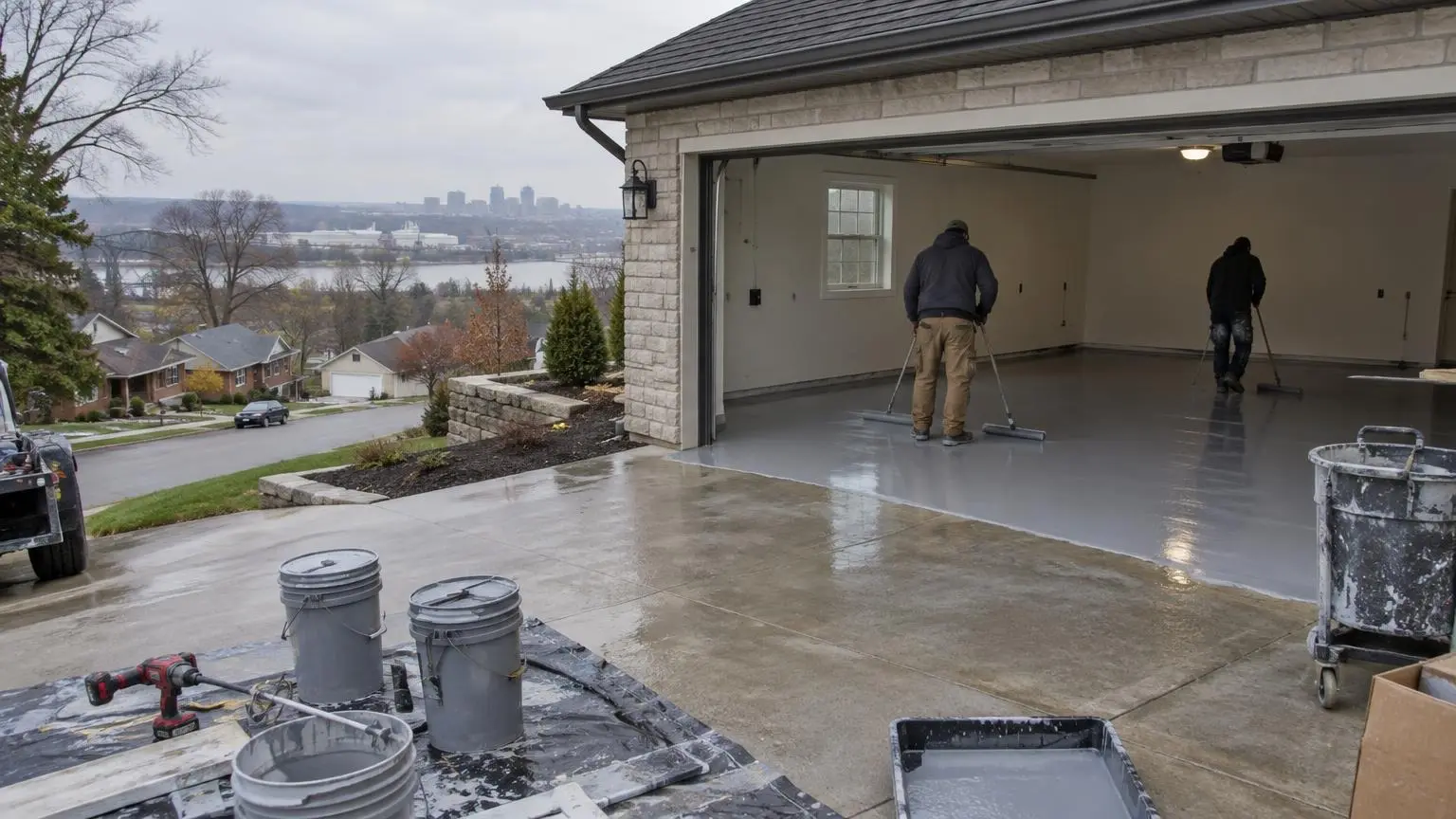
Concrete crack and floor repair is the part of a coating job that people do not see, and in Kansas City, Kansas it is often the biggest part. Census survey data summarized by Point2Homes shows that nearly half of KCK's housing was built before 1960. Slabs that old have been through decades of freezing winters, settling, spills and patching. A coating is only as good as the concrete under it. If the surface is flaking, cracked or uneven, the coating will follow those flaws or fail along them.
What we repair
- Hairline and shrinkage cracks: opened up slightly and filled so they do not show through the finished floor.
- Wider and structural-looking cracks: filled with rigid or flexible repair material depending on whether the crack is still moving.
- Spalls and pits: chipped or popped-out areas, often near the garage door or where deicer has sat, patched level.
- Broken joint edges: control joints rebuilt so tires and carts do not catch them.
- Scaled or worn surfaces: large areas of flaking skimmed or resurfaced before coating.
Why freeze-thaw matters here
Kansas City's January average low is 22.2°F, with plenty of days that warm back above freezing, according to Wikipedia's climate data for the Downtown Airport. Every time water in a crack or pore freezes, it expands and pushes the concrete apart a little more. Deicer makes it worse, because the salts crystallize in the pores as they dry. Angi's Kansas City guide notes that freeze-thaw damage can be bad enough to need resurfacing before a coating goes on. Bare garage slabs show it first, especially right inside the door.
Moving cracks versus settled cracks
Not every crack is the same. A crack that formed years ago and has stopped moving can be filled with a rigid material and coated over. A crack that is still opening, or one where one side is higher than the other, is telling you the slab or the soil under it is still shifting. Coating over it will just make a crack in the coating. We point out cracks like that, explain what we see, and tell you if a structural or drainage fix should come first.
Resurfacing
When a slab is worn across most of its surface, patching spot by spot does not give a good result. HomeGuide lists concrete resurfacing at $3 to $7 per square foot. Resurfacing puts a thin cement-based layer over the whole floor to create a new, even surface for the coating. It is usually cheaper than tearing out and pouring a new slab, and it fixes the look and texture problems that a coating alone would show.
Repair without a coating
Sometimes the right answer is repair now and coat later, or repair and seal. If budget is tight, or the slab needs time after a drainage fix, we can fill cracks and patch damaged areas on their own. That stops water from getting further into the concrete through the winter. Ask about it at the estimate.
What we will not cover up
We do not use a coating to hide a problem. If a slab is heaving, has water coming up through a crack, or has a crack that is clearly getting wider, we say so and tell you what kind of contractor to call. You should know that before you spend money on a floor.
What This Covers
Repairs are scoped and priced line by line in the quote.
Crack filling
Cracks routed and filled with rigid or flexible material matched to the crack.
Spall and pit patching
Chipped and popped-out areas rebuilt flush with the surrounding floor.
Joint rebuilding
Broken control joint edges repaired and joints refilled.
Resurfacing
A full-floor overlay when the surface is too worn for spot repairs.
Typical Concrete Repair Costs
| Item | Published range |
|---|---|
| Crack and chip patching | $25 to $250 |
| Concrete resurfacing, per sq ft | $3 to $7 |
| Extensive repairs before a coating, added | $1 to $5 per sq ft |
| Power washing, per sq ft | $0.35 to $0.77 |
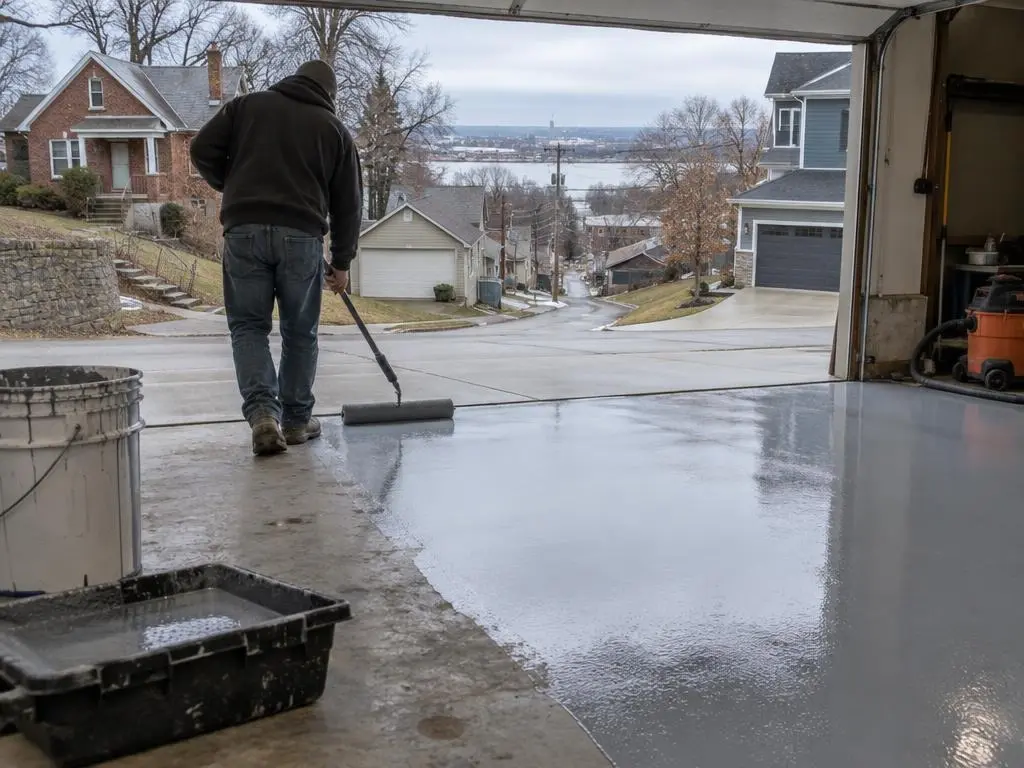
Ranges from HomeAdvisor (patching) and HomeGuide (resurfacing, repairs before polyaspartic, and power washing). How much repair a floor needs is the biggest unknown until we see it. Your written estimate is the price.
How It Works
1. Map the damage
We mark every crack, spall and worn area and note which ones are still moving.
2. Recommend a fix
Spot repairs, resurfacing or pointing you to a structural fix, written into the quote.
3. Grind and repair
The slab is ground, cracks are opened and filled, and spalls and joints are rebuilt.
4. Coat or seal
The repaired floor is coated, sealed or left ready for a later coating.
Concrete Crack & Floor Repair Questions
Can you put epoxy over cracked concrete?
Yes, once the cracks are filled and the slab is sound. Cracks that are still moving or offset need their cause fixed first, or they will come back through the coating.
Will the cracks show through a new floor?
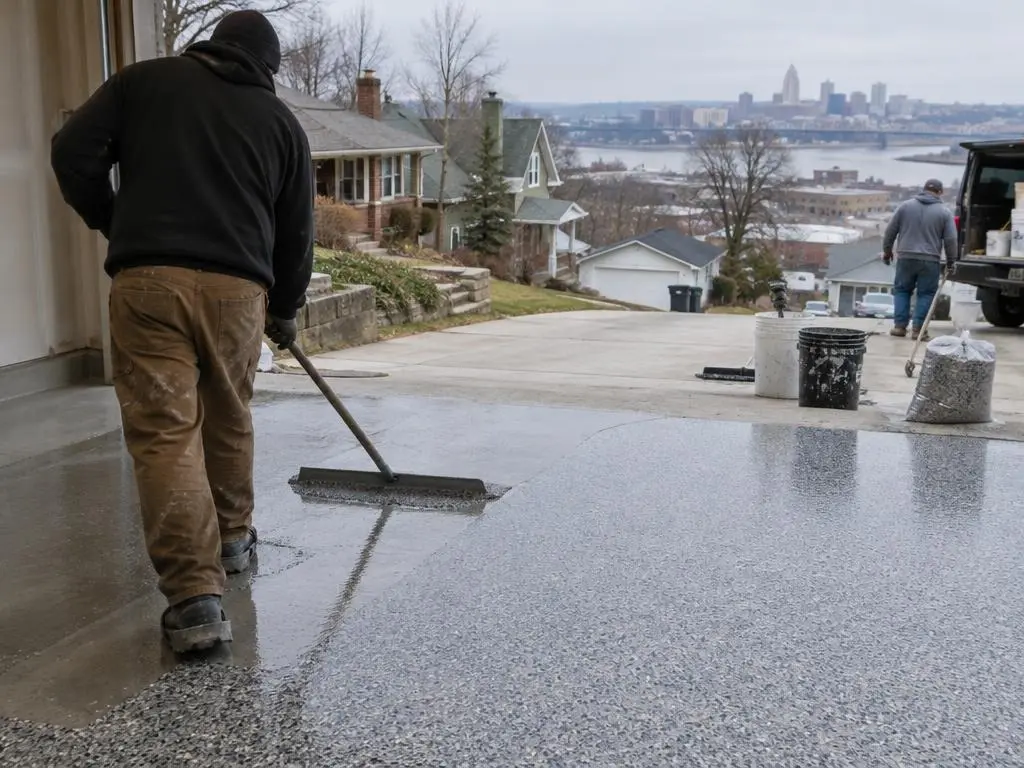
Filled and ground cracks usually disappear under a flake floor. Under a solid color, a faint line can sometimes show. We tell you what to expect for your slab.
Is resurfacing cheaper than a new slab?
Usually. HomeGuide lists resurfacing at $3 to $7 per square foot. Tearing out and repouring costs much more and takes longer, and it is only needed when the slab itself has failed.
Can you repair cracks now and coat later?
Yes. Filling cracks and patching damage before winter keeps water out of the concrete, and the floor can be coated when budget or schedule allows.
Concrete Crack & Floor Repair Service Areas
- Epoxy Flooring in Kansas City, KS
- Epoxy Flooring in Bonner Springs, KS
- Epoxy Flooring in Edwardsville, KS
- Epoxy Flooring in Overland Park, KS
- Epoxy Flooring in Olathe, KS
- Epoxy Flooring in Shawnee, KS
- Epoxy Flooring in Lenexa, KS
- Epoxy Flooring in Merriam, KS
- Epoxy Flooring in Mission, KS
- Epoxy Flooring in Roeland Park, KS
- Epoxy Flooring in Prairie Village, KS
- Epoxy Flooring in Leawood, KS
- Epoxy Flooring in De Soto, KS
- Epoxy Flooring in Basehor, KS
- Epoxy Flooring in Lansing, KS
- Epoxy Flooring in Leavenworth, KS
- Epoxy Flooring in North Kansas City, MO
- Epoxy Flooring in Riverside, MO
- Epoxy Flooring in Parkville, MO
- Epoxy Flooring in Gladstone, MO
- Epoxy Flooring in Independence, MO
Get a Concrete Crack & Floor Repair Estimate
Free slab and crack assessments in Kansas City, KS and nearby.